 Request a Tutor Become a Tutor
Surrey, Canada
I've got your back. I am a professional Math and Science tutor for High School Math and Science, First Year University Calculus, and Nursing Anatomy. I am part of a tutoring team o... Read more

Dalhousie University
I'll walk you through understanding the definition of a...
Behind every math concept there are usually a few, basic principles that you can tap into and work from there. Math responds to being very systematic, so the steps can often guide. Most students can work out math problems on their own except for one place where they're getting stuck. So I let the student take it as far as they can, and then we work on ways to identify their hurdle and work past it.
Online or in person, my only preference is that it is one-on-on so that I can focus on how that particular student is thinking and so I can tailor the guidance specifically for them.
Math is m yspecialty so I can help with any area you're struggling, elementary, high school, first year university. My favourites a pre-calculus and calculus. I also love helping with fundamentals because that unlocks the doors to understanding so much of math. I love how, once students start to understand math, they feel confident to take on other kinds of challenges as well.
If an student continues to struggle with a topic, I will email the parent and let them know the progress that has been made and what has been helping the student progress. I always let students know if I'm doing this, so that we can continue to build openness and safety. For grade 10, 11 and 12, students are more in charge of their own learning, so I tend to only do this if the student is in an extremely difficult corner or if the parents have specifically requested it. For first year university, well, students are adults by then and the relationship is between me and the student.
I have a lot of resources for bolstering a student in math. My favourites tend to be a series of workbooks by a British Colubmia, Canada, author named Michelson. I also like to use Canadian provincial exams, since the questions are in keeping with many curricula and are at a good level to get some solid ground work done. Plus I have a lot of tests from actual classrooms. I use these as supplements to shore up gaps in udnerstanding. I don't tend to assign homework. I prefer to work with the materials the student has to have ready for their actual class. I love it when we have the class course outline and text book, because that can let us work ahead, whenever possible. That can make a big difference in the student's mark. For elementary school students, I like to share a favourite link: mathplayground. It's fun for them to play the games there in between sessions and I'll often do warm ups from this site, using its games to strengthen fundamentals. For high school and university students, I sometimes find links in Khan Academy, for them to access after the session, to help them further with a concept.
Homework assignments usually form the framework for the tutoring sessions. My main approach to tutoring, in any subject, is to have the student show me how to solve the problem, as far as they can manage it. That allows me to see how much the student already undserstands and where they are stuck. Then we explore the area they're stuck. It's usually just a simple concept or a small gap in udnerstanding. Then we can finish the problem. I have students reflect back on the process of solving that question. I ask them to tell me what's clearer and what's still fuzzy. When the question is entirely clear for them, then I'll have them categorize it in their mind. Every now and then, I'll go over their categories and have them see if they can identify patterns and concepts.
That is my main job, to notice how the student is thinking and then be able to work with that style. There is so much to be said here. This is what I'm paying attention to all the time, even while we work the specific assignment problems. How does this student handle problem solving? How do they best learn? What is this hurdle they are facing? Why is it there? What kinds of words do they grasp best when I describe things. Should we use visuals here? Is this a situation where they will respond to an example? Will this student respond best to understanding the overall concept, or an anaology first and then we work the details? Does this student need to be led step by step so they can see the process and then they'll understand it? Those are just a few of the questions always going through my mind, even while analysizing the hurdle on each specific question. One thing that is almost universally true, is that it's important that to give the student time to think and to work the problem. It's possible for a tutor to talk too much and race through a problem and the student doesn't have time to absorb the lesson.
I have had many students with learning disabilities, everything from ADHD to autism to dyslexia to emotional overload. In the end, every student has very specific needs. My job to is watch for how they learn, what makes them feel comfortble and safe to settle into place and feel confident enough to handle the assigned work. For ADHD I keep the lesson lively, interconnecting concepts, peppering it with lots of humour so it stays interesting. I don't chastize if their conversation strays, I just echo the sentiments and bring us back to the job at hand. Autism, I do the opposite of that: I stay calm, quiet, simple, focused, clear and avoid analogy. For autisic students, I watch for when they are stuck or just can't bring themselves to ineract for help. To be clear, I need to see autistic students in person. Online learning doesn't work well unless they are more toward the Asperger's part of the spectrum. For dyslexia, there are some tips and tricks, like using more than one sense, such as talking to yourself about what you're doing while also writing it; going over the question backwards when you're done to check for your minus signs, etc.



 Educational Qualification
 Learning Materials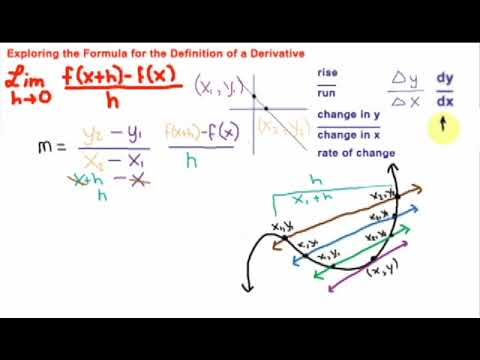



 Questions for You