
x
![]()
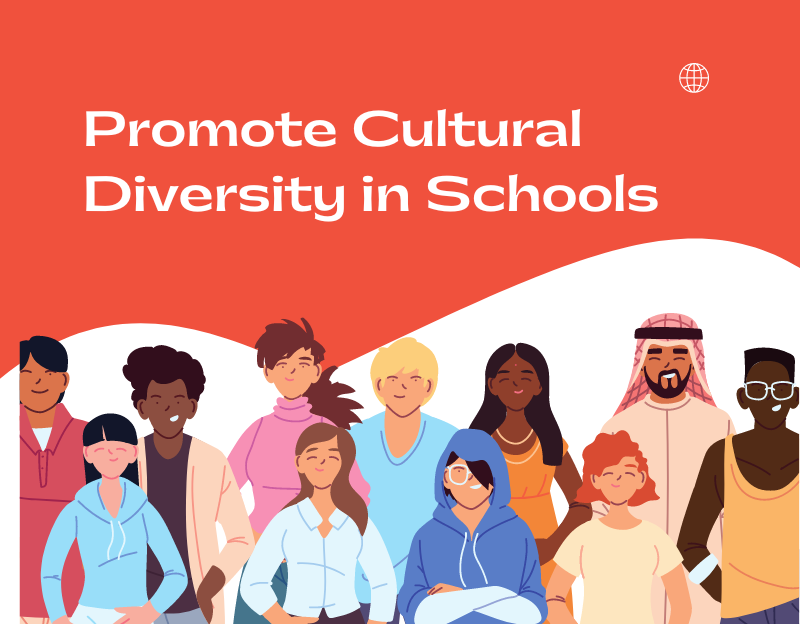
In today's interconnected world, cultural diversity in schools isn't just a buzzword; it's a necessity. The kaleidoscope of backgrounds, traditions, and perspectives enriches the educational experience, preparing students to thrive in a global...
In today's interconnected world, cultural diversity in schools isn't just a buzzword; it's a necessity. The kaleidoscope of backgrounds, traditions, and perspectives enriches the educational experience, preparing students to thrive in a global society.
Yet, fostering an environment that truly celebrates cultural diversity requires deliberate effort and thoughtful strategies. Here are some creative ways to support cultural diversity in school which will be transforming the educational landscape into a vibrant tapestry of learning.
So, how can schools promote diversity, equality & diversity in the classroom? Here are some creative ways to weave cultural diversity into the very fabric of school life:
One of the foundational steps in promoting cultural diversity is designing an inclusive curriculum that reflects the rich tapestry of student backgrounds. This involves integrating literature, history, and perspectives from diverse cultures into everyday lessons.
For instance, literature classes can explore works from authors worldwide, offering students a broader perspective. History lessons can highlight the contributions of different cultures, ensuring that students understand the global impact of diverse peoples.
Cultural exchange programs are an exciting way to immerse students in different cultures. Partnering with schools in other countries for virtual exchange programs allows students to interact, collaborate, and learn about each other's lifestyles, languages, and traditions.
These exchanges can culminate in presentations where students share their experiences, fostering a sense of global citizenship.
Organising cultural festivals within the school is a lively and engaging way to celebrate diversity. Each month, the school can spotlight a different culture, complete with food, music, dance, and traditional attire.
These festivals can be interactive, with students and parents contributing recipes, performances, and cultural artefacts. This not only educates but also builds a community spirit where everyone feels valued.
Embracing multilingual education is a powerful way to honour and promote cultural diversity. Offering classes in different languages or incorporating basic language learning into the curriculum can enhance students' appreciation for other cultures.
Bilingual education programs, where subjects are taught in two languages, can also support students from diverse linguistic backgrounds, ensuring they don't lose touch with their heritage.
Providing diversity and inclusion training for teachers and staff is crucial. Educators must be equipped with the knowledge and skills to handle cultural differences sensitively and inclusively.
Workshops and seminars on cultural competency can help staff understand and address unconscious biases, creating a more welcoming environment for all students.
Inclusive classroom practices go beyond the curriculum. Encouraging group work and collaborative projects with diverse team members can help students appreciate different perspectives and working styles.
Teachers can also use culturally responsive teaching methods, adapting their approach to meet the diverse needs of their students. This might include using examples and analogies that resonate with various cultural backgrounds or celebrating students' cultural achievements in class.
Empowering students to take the lead in promoting diversity can have a profound impact. Student-led diversity clubs can organise events, discussions, and activities that celebrate cultural differences and promote inclusion.
These clubs provide a safe space for students to express their identities, share their experiences, and learn from one another. They also foster leadership skills and a sense of ownership over the school’s cultural climate.
Introducing students to diverse role models can inspire and motivate them. Schools can invite speakers from various cultural backgrounds to share their stories and achievements.
These role models can be authors, scientists, artists, or community leaders who reflect the diversity of the student body. Highlighting their successes demonstrates that excellence knows no cultural boundaries and encourages students to aspire to greatness regardless of their background.
Engaging the wider community in school activities can enrich the cultural experience for students. Schools can collaborate with local cultural organisations, invite parents to share their traditions, and participate in community festivals.
This not only broadens students' horizons but also strengthens the connection between the school and its community, fostering mutual respect and understanding.
Ensuring that school materials reflect cultural diversity is a simple yet effective strategy. This includes textbooks, library books, posters, and even classroom decorations.
Diverse representation in educational materials helps all students feel seen and respected, and it can challenge stereotypes by showcasing a variety of cultural narratives and achievements.
Technology offers endless possibilities for exploring cultural diversity. Virtual reality (VR) can take students on virtual field trips to different countries, allowing them to experience new cultures firsthand.
Online platforms can connect classrooms with students from around the world for collaborative projects. Social media campaigns can highlight cultural stories and achievements, reaching a broad audience and sparking meaningful conversations.
Storytelling is a powerful way to share and celebrate cultural heritage. Schools can host storytelling sessions where students, parents, and community members share folktales, personal stories, and cultural myths.
These sessions can be recorded and compiled into a digital library, creating a lasting resource for the school community. Storytelling not only entertains but also educates, fostering empathy and understanding.
Art and music are universal languages that can bridge cultural gaps. Schools can incorporate diverse art and music programs, allowing students to explore different cultural expressions.
Art projects can include traditional crafts from various cultures, while music classes can introduce students to global musical styles and instruments. School performances showcasing multicultural art and music can be a highlight of the academic year.
Creating an inclusive environment goes beyond specific programs and events. It involves cultivating a school culture where every student feels valued and respected.
This can be achieved by encouraging open dialogue, addressing incidents of discrimination promptly, and celebrating the unique contributions of each student. Schools should strive to be places where diversity is not just accepted but cherished.
Conclusion
These ways to support cultural diversity in schools are not just about implementing programs and policies; it's about nurturing an environment where every student feels seen, heard, and valued. As we celebrate our differences, we build a foundation of mutual respect and understanding, preparing students to become compassionate, global citizens in an ever-changing world.


MyPrivateTutor is an online community of school teachers and private tutors who come together to share their work, knowledge and rich experience with students to help them prepare well and excel in their exams. We help connect students to tutors in their locality. Students search for tutors and tutors pay a lead generation fee to contact the students and start taking lessons either in-person or online. We have been operating since 2002 and operate in Canada, US, UK, India, and many other countries.

Tell us your learning requirements in detail and get immediate responses from qualified tutors and institutes near you.
Post Learning Requirement


