
x
![]()
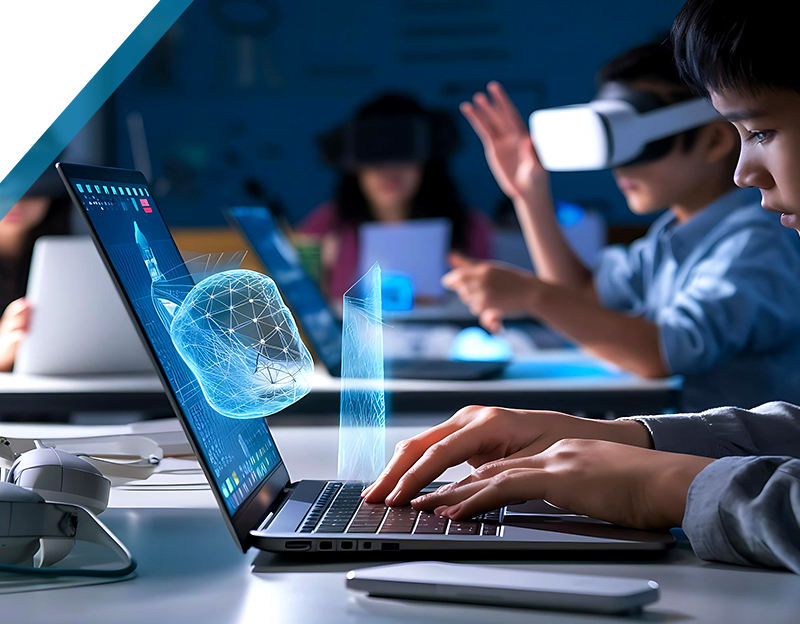
The landscape of higher education has undergone significant transformations in recent years, largely driven by the rapid advancement of digital technologies. Traditional models of learning, once reliant on physical classrooms and face-to-face interactions...
The landscape of higher education has undergone significant transformations in recent years, largely driven by the rapid advancement of digital technologies. Traditional models of learning, once reliant on physical classrooms and face-to-face interactions, are increasingly being supplemented or replaced by digital platforms. The shift towards online education has been accelerated by global events such as the COVID-19 pandemic, which forced institutions to adapt to remote learning environments swiftly. As we look to the future, it is clear that the digital age will continue to shape the way higher education is delivered, accessed, and experienced.
One of the most notable changes in higher education is the widespread adoption of online learning platforms. These platforms have made education more accessible to a broader audience, breaking down geographical barriers and allowing students to learn from anywhere in the world. The flexibility offered by online learning is particularly appealing to working professionals and non-traditional students who require a more adaptable approach to education.
Furthermore, online learning platforms have enabled institutions to offer a wider range of courses and programmes, often at a lower cost than traditional in-person options. This has led to increased enrolment rates and has opened up opportunities for lifelong learning. However, the rise of online education also presents challenges, particularly in terms of maintaining the quality and integrity of assessments.
Another significant trend in higher education is the emergence of micro-credentials and alternative learning pathways. Micro-credentials are short, focused courses that allow students to gain specific skills or knowledge in a particular area. These credentials can be earned more quickly than traditional degrees and are often stackable, meaning that students can combine multiple micro-credentials to create a more comprehensive qualification.
This approach to education is becoming increasingly popular among both students and employers, as it allows for more flexible and targeted learning. For educational institutions, offering micro-credentials can attract a broader range of students, including those looking to upskill or reskill in a rapidly changing job market.
Artificial intelligence (AI) is playing a growing role in higher education, particularly in the area of personalised learning. AI-powered tools can analyse student data to identify learning patterns and preferences, enabling educators to tailor instruction to meet individual needs. This approach can help improve student engagement and outcomes by providing a more customised learning experience.
For example, AI can be used to develop adaptive learning platforms that adjust the content and pace of instruction based on a student’s performance. These platforms can provide real-time feedback and support, helping students stay on track and address any learning gaps. As AI technology continues to advance, its potential to enhance education is vast.
Virtual Reality (VR) and Augmented Reality (AR) are emerging as powerful tools in higher education, offering immersive learning experiences that can simulate real-world scenarios. These technologies have the potential to transform fields such as medicine, engineering, and the arts by providing students with hands-on, experiential learning opportunities in a virtual environment.
For example, medical students can use VR to practice surgical procedures in a risk-free setting, while engineering students can design and test structures in a virtual space. AR can enhance traditional classroom learning by overlaying digital information onto the physical world, making complex concepts more tangible and understandable. As VR and AR technology becomes more accessible, its impact on education will likely continue to grow.
As higher education continues to evolve in the digital age, the integrity of online assessments has become a critical concern. Educational institutions must ensure that the assessments they administer online are secure, fair, and reflective of students’ true abilities. This is where reliable online assessment platforms play a crucial role.
Reliable assessment platforms are designed to offer secure, scalable, and customisable solutions that cater to the unique needs of educational institutions. These platforms utilise advanced technologies such as artificial intelligence and machine learning to monitor and analyse student behaviour during exams, helping to detect and prevent cheating. They also offer a range of assessment types, from multiple-choice questions to essay submissions, allowing institutions to choose the most appropriate method for evaluating student performance.
Educational institutions now recognise the necessity of adopting online assessment software to effectively manage the complexities of large-scale exam administration. Such software ensures secure and smooth testing processes, regardless of the number of participants. Additionally, these platforms come equipped with comprehensive reporting and analytics tools, providing valuable insights into student performance. This data-driven approach allows educators to identify areas for improvement and tailor their teaching strategies to better meet student needs.
As we move forward, the future of higher education is likely to be characterised by a hybrid model that combines the best of both traditional and digital learning environments. While online education will continue to play a significant role, there will also be a renewed focus on creating interactive and engaging in-person experiences that complement digital learning.
In this hybrid model, technology will be harnessed to enhance the learning experience, making it more personalised and adaptive to individual students’ needs. Artificial intelligence and data analytics will be used to create customised learning paths, while virtual and augmented reality will provide immersive learning experiences that go beyond the limitations of a physical classroom.


MyPrivateTutor is an online community of school teachers and private tutors who come together to share their work, knowledge and rich experience with students to help them prepare well and excel in their exams. We help connect students to tutors in their locality. Students search for tutors and tutors pay a lead generation fee to contact the students and start taking lessons either in-person or online. We have been operating since 2002 and operate in Canada, US, UK, India, and many other countries.

Tell us your learning requirements in detail and get immediate responses from qualified tutors and institutes near you.
Post Learning Requirement


