 Request a Tutor Become a Tutor
Bangkok, Thailand
Please watch my video to learn more about me and my teaching approach.

I am writing to express my interest in the IELTS Tutor position. With a Bachelor’s degree in English Language and Literature from Hpa-an University and currently pursuing my Master... Read more
My teaching methodology for IELTS is strategic, student-centered, and results-driven. I focus on equipping students with the specific skills, strategies, and confidence they need t... Read more

Hpa-an University
King Mongkut's University of Technology Thonburi (KMUTT)
Online
You can learn how to write IELTS academic writing task ...
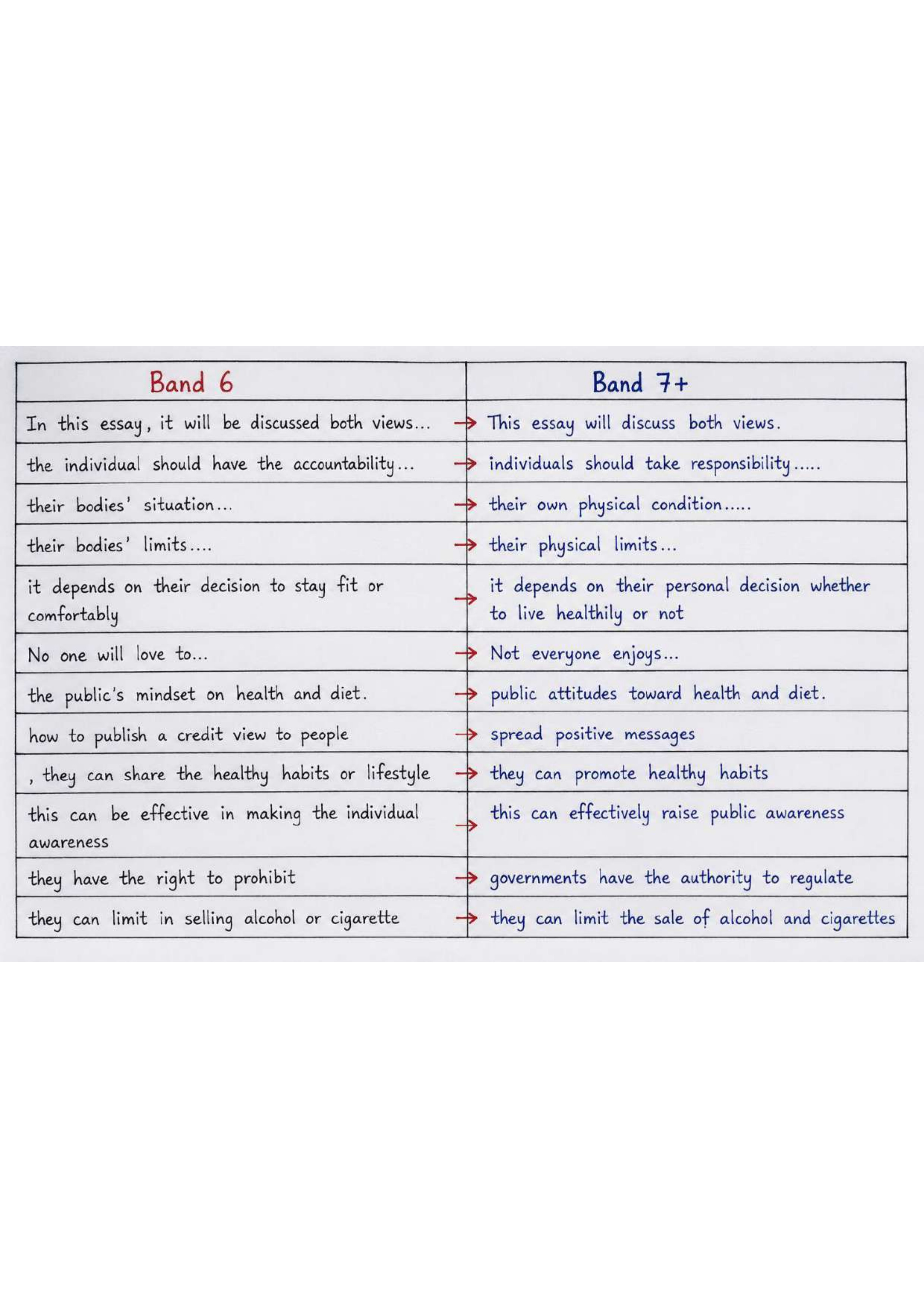
These notes are common to see in some students' writing...
I usually focus on the Language/English sections of the SAT and ACT, where the tested skills are very structured and predictable. The main areas I specialize in are: SAT Writing & Language / ACT English Focus Grammar & Usage: subject–verb agreement, pronoun clarity, verb tense, modifiers, parallelism, and punctuation (commas, semicolons, colons, dashes). Sentence Structure & Style: concision, redundancy elimination, combining sentences effectively, and avoiding awkward phrasing. Rhetorical Skills: logical transitions, tone consistency, clarity of ideas, and purpose of a passage (adding/deleting sentences, improving paragraph flow). Vocabulary-in-Context & Precision: choosing the best word/phrase for accuracy and style. Data & Evidence Use: interpreting charts/tables that accompany passages (SAT only). Student Levels I Work With High school students (Grades 9–12) who are preparing for the SAT or ACT. I often work with upper-intermediate to advanced English learners (including IB and international school students, like your Bangkok Patana student). For students who struggle, I also design step-by-step scaffolding lessons: starting with basic grammar review, then applying those rules directly to exam-style questions. With stronger students, I emphasize timed drills, advanced strategy, and error analysis to push scores toward the 700+ range (SAT) or 30+ (ACT).
1. Time Management Pacing awareness: I train students to know how much time per passage or per set of questions is “normal.” SAT Writing & Language: ~35 minutes for 44 questions → less than a minute per question. ACT English: ~45 minutes for 75 questions → ~35 seconds per question. “No lingering” rule: If a question takes more than 45 seconds, mark it and move on—come back later if time allows. Chunking passages: Work passage by passage, not jumping around, to maintain focus. 2. Test-Taking Skills Answer Choice Elimination: Cross out anything grammatically wrong first (wrong tense, subject–verb mismatch, punctuation misuse). Then compare stylistic or rhetorical options (clarity, concision, tone). Consistency with the passage: Remind students the “best” answer isn’t always what sounds good, but what fits the passage’s meaning and style. Patterns practice: I emphasize that test-makers recycle the same error types. Once students spot the pattern, they gain confidence. 3. Guessing Strategies No blanks: Never leave a question unanswered—the tests don’t penalize guessing. Educated guessing: If unsure, eliminate even one option before guessing. That raises odds from 25% to 33%. Instinct trust: On grammar, first instincts are often right, so don’t second-guess too much unless you spot a clear rule violation. 4. Practice System Timed drills: Students first practice untimed (focus on accuracy), then timed (focus on pacing). Error logs: Every mistake gets logged into a “pattern tracker”—whether it’s comma rules, misplaced modifiers, or transition words. Simulated tests: I give students full timed sections to build endurance and real exam rhythm.
1. Using Official Test Materials SAT: I rely on College Board’s official practice tests (the Blue Book, released PDFs, and online adaptive modules for the Digital SAT). ACT: I use ACT’s official prep guide and released practice tests, which best reflect the test-maker’s style. ? This ensures that students are exposed only to real test-style questions—not over-simplified workbook versions. 2. Staying Updated with Format Changes Digital SAT (since 2023–2024): I emphasize the new shorter passages with one question each, instead of long multi-question passages. Lessons now focus on precision and conciseness per passage. ACT English: The format has remained stable, but I update drills to match the ACT’s preference for speed and concision. 3. Breaking Down Content by Official Domains I align every lesson to the domains the test makers publish: SAT Writing & Language / Digital SAT English Standard English Conventions (grammar, punctuation, agreement) Expression of Ideas (conciseness, clarity, transitions, tone) ACT English Production of Writing (purpose, organization, style) Knowledge of Language (precision, concision) Conventions of Standard English (grammar & mechanics) By explicitly linking practice questions to these categories, students can see how each skill is tested. 4. Constant Practice–Feedback Cycle After timed drills, we do error analysis together: Which content category caused the mistake? Which strategy would have helped? Students keep a personal error tracker mapped to official categories, so improvement is data-driven, not random. 5. Professional Development I regularly review: College Board/ACT educator updates. New official sample questions when released. Trusted prep sources (e.g., Khan Academy for SAT, ACT Academy, and test prep conferences). This way, I know if the test is shifting emphasis—for example, SAT moving more into evidence-based precision and ACT sticking with speed grammar.
1. Diagnostic & Personalization Initial diagnostic test (or section drill) to see where the student stands in grammar, style, and pacing. Error analysis: I identify whether weaknesses are in rules (e.g., subject–verb agreement), rhetorical skills (e.g., transitions, tone), or time management. I then create a study roadmap tailored to the student—because a student aiming for 650→700 has different needs than one pushing from 700→760. 2. Lesson Structure Each lesson follows a clear progression: a. Warm-Up (5–10 min) Quick review of a prior mistake pattern (e.g., “modifier placement mini-drill”). b. Skill Focus (20–30 min) Direct instruction on one domain, such as punctuation rules, rhetorical strategy, or concision. Rule explanation → Guided examples → Independent practice. c. Application to Real Test Questions (30–40 min) Work through official SAT/ACT questions. I model elimination strategies and time management techniques, then students practice with increasing independence. d. Timed Drill (10–15 min) Short section under exam conditions to practice pacing. e. Review & Error Log (10 min) We discuss not just what was wrong but why—building a personal “error tracker” categorized by test domain. 3. Individualization Different levels: For struggling students, I break concepts into smaller steps, often with color-coded notes and simplified rule sheets. For advanced students, I emphasize speed, nuance (e.g., when two answers are both grammatically correct but one is stylistically sharper), and “hard question traps.” Different goals: Some need a high composite (balance across all sections). Others just need to raise English to boost their overall score. I adjust weighting of drills accordingly. 4. Strategy Integration Throughout every lesson, I weave in: Pacing tips (when to skip/return). Guessing strategies (educated elimination). Endurance training (handling exam fatigue). 5. Homework & Reinforcement Students get official question sets for homework, scored with error logs. I assign a 20-point rubric homework task (short passage editing or timed mini-set) so parents can see progress numerically.
Sample Lesson Plan: Punctuation & Sentence Structure Objective Students will master common punctuation rules (commas, semicolons, colons, dashes) and apply them to SAT/ACT exam questions with accuracy and speed. 1. Warm-Up (10 minutes) Quick drill: 5 sentences with missing punctuation. Example: The chef prepared pasta( ) the sauce simmered for hours. (Answer: semicolon) Goal: activate prior knowledge and spot where confusion arises. 2. Direct Instruction (20 minutes) Mini-lecture on punctuation rules, with examples from official tests: Commas: separating clauses, items in a list, nonessential info. Semicolons: joining two complete sentences without a conjunction. Colons: introducing lists, explanations, or examples. Dashes: emphasizing or setting off information. ? I use a color-coded chart (rule + example + common trap). 3. Guided Practice (20 minutes) Work through 6–8 official SAT/ACT questions together. I model “think-aloud” elimination: Is it one sentence or two? Is the phrase essential or nonessential? Which punctuation keeps the meaning clear and concise? 4. Independent Timed Drill (15 minutes) Student does a short set of 8 timed questions (about 10–12 minutes). We review immediately, focusing on both accuracy and time used. 5. Strategy Focus (10 minutes) Teach students “Punctuation Decision Tree”: Do I have two complete sentences? → semicolon or period. Am I introducing or explaining? → colon. Is it extra info? → commas or dashes. Emphasize efficiency: if more than one choice is grammatically correct, pick the simplest/clearest. 6. Reflection & Error Log (10 minutes) Student records mistakes into their error tracker under “Punctuation.” We discuss patterns (e.g., “You confuse colons vs. semicolons”). 7. Homework (5 minutes explanation) Assign 1 passage (11 questions) from an official SAT/ACT test focusing on punctuation. Student logs errors and writes a one-sentence “rule reminder” for each. ✅ Outcomes By the end of the lesson, the student should: Apply punctuation rules accurately in SAT/ACT contexts. Improve speed by using a decision tree. Build awareness of their personal weak spots.
1. Diagnostic Test or Placement Activity Official practice section: I often begin with a full SAT/ACT Language section (or a shortened version) to see where they stand under real conditions. Breakdown by category: I check accuracy in Grammar/Conventions (subject–verb, modifiers, punctuation) Rhetorical Skills (transitions, conciseness, purpose of passage) Timing (did they rush or run out of time?). This gives me a baseline “score level” (e.g., SAT mid-500s vs. 650+, ACT 18 vs. 28). 2. Targeted Grammar & Writing Tasks Sentence editing task: Students correct sentences with common test errors. Their approach shows me whether they rely on instinct (“sounds right”) or rules (“needs a plural verb”). Short writing task: A 150–200 word response on a familiar topic. I check grammar control, vocabulary range, sentence variety, and clarity. 3. Reading & Comprehension Observation I give a short passage with a few comprehension and vocabulary-in-context questions. This shows me their reading speed, inference ability, and whether language errors stem from grammar gaps or reading misunderstandings. 4. Student Self-Reflection & Goal Setting I ask students: Which areas do you feel confident in (grammar, vocabulary, reading)? Which areas feel hardest under time pressure? This helps me distinguish between real weaknesses and confidence issues. 5. Continuous Assessment After each lesson, I track errors in an “Error Log” by category (commas, transitions, idioms, etc.). Over time, patterns emerge that show their true proficiency level—much more accurate than a single test snapshot.
1. Official Test Materials (Core) College Board (SAT) Blue Book Digital SAT practice tests Released paper SAT tests (for extra drills) Khan Academy official SAT practice (linked to College Board) ACT, Inc. (ACT) Official ACT Prep Guide (yearly updated book) Released ACT practice tests (PDFs from past years) ? These are the gold standard, since they reflect real test phrasing, difficulty, and trap patterns. 2. Supplementary Prep Books Grammar & Rhetoric Skills: Erica Meltzer’s The Ultimate Guide to SAT Grammar / The Complete Guide to ACT English (great for systematic rule review). PWN the SAT (for strategy-heavy practice). Practice Sets: Kaplan and Princeton Review for extra drills (but I filter carefully—some aren’t as close to the real exam). 3. Custom Worksheets & Mini-Drills (Teacher-Created) Rule-focused handouts: commas, pronouns, transitions, conciseness. Timed “10-question challenge” sheets to simulate exam pacing. Error Log templates where students track their mistakes by category. 4. Digital Tools Google Docs/Slides for live annotation and collaborative error analysis. Quizlet/Anki for flashcards on grammar rules, idioms, and transition words. Online whiteboard (Miro or Jamboard) for sentence diagramming and rule demonstrations. 5. Student-Specific Additions For IB or international school students: I sometimes pull in academic English readings or poetry annotations to connect exam prep with their schoolwork. For ELL (English Language Learner) students: I build vocabulary-in-context practice using adapted SAT/ACT questions.
1. Foundations: Grammar & Sentence Control Rule mastery: I make sure students can write error-free sentences with strong grammar (verb tense, subject–verb agreement, modifiers, punctuation). Sentence variety drills: Students practice combining short sentences into more sophisticated ones using transitions, subordinating conjunctions, and appositives. Conciseness training: Cut redundancy—students learn to say more with fewer words, a key SAT/ACT skill. 2. Paragraph Structure & Organization PEEL/TEEL method (Point → Evidence → Explanation → Link): I teach this for essays so every paragraph has a clear focus. Strong topic sentences: Students practice writing openings that set up the paragraph’s main idea. Logical flow: We use transition words and paragraph re-ordering drills to improve coherence. 3. Essay & Extended Writing Development SAT/ACT essay (where applicable): Break down how to analyze an author’s argument (rhetorical strategies, evidence, reasoning, style). Practice timed essay outlines before full essays. Cause–effect, problem–solution, compare–contrast structures: These help students write academic essays efficiently for both school and test prep. 4. Vocabulary & Style Precision word choice: Replace vague words (“good,” “bad,” “thing”) with precise academic vocabulary. Register awareness: Adjust tone depending on purpose—formal for essays, concise for SAT/ACT, descriptive for school assignments. Synonym drills: Practice choosing between near-synonyms depending on tone and context. 5. Process & Feedback Step-by-step drafting: Outline → Quick draft → Revise for clarity → Edit for grammar → Proofread for polish. Error logs: Students record recurring mistakes (e.g., run-on sentences, missing transitions) and track progress. Model & imitate: I show students model essays, then have them rewrite paragraphs in a similar style. 6. Timed Writing Practice For SAT/ACT, I run timed drills: 10 minutes planning, 25–30 minutes writing, 5 minutes editing. For school essays, we do speed-writing warmups to reduce “blank page” anxiety, then build up to polished pieces.
When I teach grammar and vocabulary—especially for SAT/ACT prep—I try to make it rule-based, pattern-focused, and applied directly to test questions so students don’t just memorize, but actually use the knowledge. Here’s how I approach it: 1. Teaching Grammar a. Rule-Based Instruction I break grammar into core categories the tests emphasize: Sentence Structure (fragments, run-ons, comma splices) Verb Rules (tense consistency, subject–verb agreement, parallelism) Pronouns (agreement, clarity, case) Modifiers & Word Order (misplaced modifiers, dangling modifiers) Punctuation (commas, colons, semicolons, dashes) b. Pattern Recognition Instead of teaching every tiny rule, I highlight the patterns that repeat on SAT/ACT. Example: “If the subject and verb are separated by a phrase in commas, ignore the phrase to check agreement.” c. Active Practice Error Hunt: Students correct sentences with built-in traps. Compare & Eliminate: Show multiple-choice options, eliminate by rule violations. Timed mini-drills (5–10 questions) to practice grammar under pacing pressure. 2. Teaching Vocabulary a. Context-Based Learning I don’t give long word lists (low retention). Instead, I teach how to use context clues—definition, contrast, cause–effect, tone. Example: “Unlike her gregarious sister, Maria was often ___.” (Answer: reserved). b. Precision & Concision SAT/ACT often tests not “hard” words but the most precise word. Drills on choosing between synonyms (e.g., “big” vs. “significant” vs. “considerable”). c. Thematic Grouping For longer-term growth, I introduce vocabulary in families (e.g., “benevolent, benefactor, beneficial” all tied to bene = good). Helps students recognize roots and prefixes quickly in unfamiliar words. d. Active Use Students apply new vocabulary in short writing exercises or sentence-completion games. I also use flashcards (Quizlet/Anki) for spaced repetition. 3. Integration with Test Prep Every grammar or vocabulary lesson ends with real SAT/ACT practice questions to apply the concept immediately. Students update their error log, tagging mistakes as “grammar rule” or “vocab in context.” In short: I teach grammar as clear patterns + rule application, and vocabulary as context-driven precision, always reinforced with official-style practice so it’s exam-ready.
Yes — I always recommend and provide mock exams for my SAT/ACT students, because practicing under real exam conditions is one of the most effective ways to build both accuracy and endurance. Here’s how I structure them: 1. Full-Length Mock Exams Official Tests Only: I use released SATs from College Board or released ACTs from ACT, Inc. so students practice with real material. Timed & Simulated Conditions: Strict timing (with breaks). No phone, no notes — just like test day. Online adaptive format for the Digital SAT (using Blue Book app), or printed PDFs for ACT. 2. Sectional Practice Exams For students with limited time, I also run section-only mocks (e.g., just the ACT English or SAT Reading & Writing section). Useful for targeted score boosting without the fatigue of a full test. 3. Feedback & Analysis After each mock exam, I provide: Score breakdown by category (grammar conventions, rhetoric, vocab in context, timing). Error log update: Students tag each mistake with a category (comma, transitions, parallelism, etc.). Strategy notes: Identify whether errors came from knowledge gaps, carelessness, or time pressure. 4. Frequency New students: 1 diagnostic mock at the beginning. During prep: 1 full mock every 3–4 weeks. Final stage (last month before exam): 1 mock per week for stamina and confidence. In short: Yes, I offer mock exams with full feedback, so students not only test themselves but also learn how to study smarter for the next attempt.
When I teach essay writing (whether for SAT/ACT essays, school assignments, or academic writing), I focus on giving students a clear framework they can rely on under time pressure. My approach blends structure, clarity, and critical thinking. Here’s how I guide them: 1. Start with the Essay Blueprint I teach students a repeatable structure so they never feel “lost”: Introduction Hook/Context (set up the topic) Clear Thesis Statement (answer the question directly) Body Paragraphs (2–3) Topic Sentence (the “mini-thesis” of the paragraph) Evidence/Example (from text, personal knowledge, or reasoning) Explanation/Analysis (why the evidence supports the thesis) Link/Transition (connect to next paragraph) Conclusion Restate thesis in new words Summarize main points End with broader insight 2. Teach Outlining Before Writing I make students spend 5–7 minutes planning before they start. Outline includes thesis + 2–3 points of evidence + examples. This reduces panic and creates a logical flow. 3. Paragraph Development Techniques PEEL/TEEL method (Point → Evidence → Explanation → Link). Drill exercises: I give students evidence and have them practice turning it into full PEEL paragraphs. 4. Focus on Clarity and Concision I train students to avoid vague statements like “This is important because it shows something.” Instead, push them toward specific, analytical sentences: “This use of statistical evidence strengthens the author’s argument by making it more credible to the audience.” 5. Practice with Timed Essays For test prep: 25–30 minutes to write a complete essay. For school essays: longer drafts, but I still include timed writing to fight “blank page paralysis.” 6. Feedback & Revision I mark essays with a rubric (content, organization, grammar/style, vocabulary). I highlight strengths and growth areas (e.g., “Great thesis clarity, but add more transitions for smoother flow”). Students rewrite key sections—especially introductions and topic sentences—to internalize the structure. 7. Build Style Over Time Once the structure feels natural, we add sentence variety, advanced vocabulary, and rhetorical devices for stronger impact. Advanced students learn to balance clarity + sophistication without overcomplicating. In short: I teach essay writing as structure first → evidence & analysis → style enhancement, with heavy practice in outlining and timed writing so students can confidently produce a well-structured essay every time.
1. Diagnostic Listening & Speaking I start with a short reading passage (like an SAT/ACT excerpt or a poem) and ask the student to read aloud. I note patterns in: Individual sounds (e.g., /θ/ in think, /r/ vs /l/, final consonants). Word stress (e.g., project vs. project). Sentence intonation (rising vs. falling tone, monotone delivery). 2. Sound-Level Work (Pronunciation) Minimal pairs practice: contrast words like ship/sheep or rice/lice. Phonetic awareness: I sometimes show IPA symbols for tricky sounds. Mouth positioning & drilling: short, focused practice (e.g., tongue placement for /th/). 3. Word & Sentence Stress I teach the “stress-timed rhythm” of English: stressed syllables carry the beat, unstressed syllables are quicker. Activities: Clap or tap rhythm while reading. Mark stressed syllables in practice sentences. Practice reducing weak words (e.g., “gonna,” “wanna,” “of” pronounced as /əv/). 4. Intonation & Expression Intonation ladders: practice rising tone for questions, falling tone for statements. Chunking sentences: pause naturally at commas/clauses to avoid run-on monotone speech. Role-play & dramatization: reading dialogues, poems, or even SAT passages with emotional variation to practice natural rise/fall. 5. Listening as a Model I assign shadowing exercises: students listen to a short clip (TED Talk, news, audiobook) and immediately repeat, matching rhythm and intonation. Record & playback: students record their speech, compare with native models, and self-correct. 6. Integration with Test Prep For SAT/ACT, I link pronunciation to reading fluency: smoother reading = better comprehension. For academic/IELTS contexts, I focus on clear, confident delivery so their ideas are understood easily. 7. Homework & Reinforcement Daily 5-minute shadowing (podcasts, speeches, YouTube lectures). Record yourself reading one SAT/ACT passage per week, then self-assess stress & intonation. Error log for pronunciation (just like grammar)—students track recurring sound issues and review them weekly. In short: I teach pronunciation and intonation through sound drills, rhythm practice, expressive reading, and shadowing exercises, always tied to real communication and academic contexts so students sound clear, confident, and natural.
Improving listening skills is especially important for English learners preparing for SAT/ACT, IELTS, or academic success. Listening isn’t just about hearing words — it’s about catching meaning, tone, and detail under time pressure. Here’s how I approach it: 1. Diagnostic Listening Check I start with a short audio (1–2 minutes) — e.g., a TED-Ed clip, news excerpt, or academic lecture. Students answer a few comprehension questions (main idea, detail, inference). I track whether mistakes come from vocabulary gaps, speed, accent variation, or concentration. 2. Active Listening Strategies Prediction: Before playing audio, students guess what they’ll hear from the title/context. Chunking: I train them to listen in idea groups (not word by word). Signal words: Identify phrases like “however,” “on the other hand,” “as a result” that guide meaning. Note-taking: Practice simple note systems (arrows, symbols, abbreviations) instead of full sentences. 3. Focused Listening Practice Main idea vs. details: One round for gist, another round for specific facts. Dictation drills: For tricky sentences, students write what they hear, then check accuracy. Accent exposure: Mix American, British, and international English sources (important for global tests like IELTS, TOEFL). 4. Building Vocabulary Through Listening Pause audio at academic or high-frequency SAT/ACT words and discuss meaning from context. Train students to recognize paraphrasing (e.g., “rise” vs. “increase” vs. “go up”). Encourage listening + reading: follow transcripts to reinforce sound–spelling connections. 5. Integrating with Test Prep SAT/ACT: Listening is not directly tested, but stronger listening improves reading comprehension fluency (students read more like they “hear” English in their head). IELTS/TOEFL: I run full practice sections with time-limited answer sheets, teaching students to move on quickly and not get stuck. 6. Practice Routines & Homework Shadowing: Repeat along with a native speaker to match rhythm and pronunciation. Podcast routine: Listen 10–15 minutes daily (choose topics they enjoy, like science, sports, or culture). Summarize aloud: After listening, students explain the content in their own words — strengthens both comprehension and speaking. Listening journal: Write down 3 new phrases/expressions after each session. In short: I teach listening as an active skill — predict, catch signals, take notes, and process meaning — reinforced with daily exposure and strategy drills.
That’s such a key question—because even the best lesson plan won’t work if a student loses motivation. For English learning (and especially SAT/ACT prep), I use a mix of personalization, goal-setting, and confidence-building strategies to keep students engaged and progressing: 1. Set Clear, Achievable Goals Short-term goals: “This week you’ll master comma rules” or “Raise your accuracy on transition questions to 80%.” Long-term goals: Tie progress to their aspirations—admission to a dream university, a target SAT/ACT score, or confidence in academic English. I remind them often how small gains connect to the big picture. 2. Show Visible Progress I keep an error log and share progress charts: “Last month you missed 7/10 comma questions, this week only 2/10.” Students see improvement in black and white, which boosts motivation. After each mock test, I highlight strengths before weaknesses, so they feel rewarded for effort. 3. Personalize Lessons Around Interests If a student loves sports, I’ll use sports articles for reading practice. If they like science, I’ll pull TED Talks or academic passages in that area. For younger teens, I might gamify drills with mini competitions or speed challenges. 4. Build Confidence Through Strategy Many students lose motivation because they think mistakes = failure. I reframe errors as clues: “This mistake shows us where the test makers trap people—you’ve just spotted their trick!” Emphasizing strategy over perfection helps students feel more in control. 5. Encourage Autonomy I give students choice in some activities (pick which passage to analyze, choose between vocab drills or grammar drills). When students feel ownership, motivation rises. 6. Connect Learning to Real Life I show how better English helps beyond the test: Writing clearer essays in school. Speaking more confidently in class discussions. Understanding podcasts, songs, or articles they enjoy. 7. Celebrate Small Wins I use positive reinforcement: a quick message after homework well done, or a verbal “This paragraph was excellent—exactly what the SAT wants.” Sometimes I set “score milestones” (e.g., reward after breaking 600 on SAT English or 25 on ACT English). In short: I motivate students by combining progress tracking, personal relevance, confidence-building, and encouragement—so they see English not just as an exam subject, but as a life skill that opens doors.



 Educational Qualification
 Learning Materials


 Questions for You