 Request a Tutor Become a Tutor
Lagos, Nigeria
I've been teaching biology for the past 3 years to K-level and O-level students.
My approach is conversational, allowing my students and me to share thoughts, ask questions, an... Read more
My teaching style is interactive and student-centered, which helps me fully engage with my students.

Queen Margaret University
No files uploaded yet
This teaching video is all about pronunciation and maki...
No files uploaded yet
Most students struggle with Bio because of tough vocabulary, long processes, and low confidence. I fix that by breaking words into roots with visuals, teaching big-picture first then zooming in, and using real-life examples like “mitochondria = power plant.” We practice explaining diagrams out loud in simple English, and I celebrate small wins so they stop fearing the subject. On video calls, we draw together live and I send 5 custom vocab words after class. Once they can explain Bio in their own words, the grades follow.
For students who stay at least 6 sessions, about *8 out of 10 improve by 1–2 letter grades* on their next Bio exam. Most who were failing end up passing, and a few switch from hating Bio to taking it at the next level. Biggest factor is consistency: weekly video calls + practicing explanations out loud.
I turn Bio into stories, not facts. Every process is a drama: enzymes are lock-and-key spies, white blood cells are the body’s army, photosynthesis is plants cooking with sunlight. I use 3 tricks: 1. *Draw it live*: We sketch diagrams together on video calls. They tell me where to label, then I make them draw while I guess. Mistakes are funny, not scary. 2. *Real-life hooks*: Why does your muscle cramp? Why do cut apples turn brown? We answer with Bio, so it feels useful, not abstract. 3. *Make them the teacher*: After we learn it, they have to explain it back to me like I’m 10 years old. If they can make _me_ understand osmosis, they know it. Add memes, quick 2-minute quiz games, and custom vocab cards with jokes, and suddenly Bio stops being “boring textbook” and starts being “oh, that’s why my body does that.”
I start every concept with “where have you seen this?” instead of “what’s the definition?” We take the Bio idea and hunt for it in daily life. Enzymes → why meat gets tender in pineapple juice. Osmosis → why your fingers wrinkle in the bath. Respiration → why you breathe harder after running. Then I flip it: I give them a real problem and they have to solve it with Bio. “Your friend put salt on a slug. What’s happening to the cells and why?” or “A farmer’s crops are yellowing. Which cycle is broken?” On video calls, we use photos, news headlines, or stuff in their kitchen as case studies. I make them explain it out loud in simple English like they’re teaching a friend. Once they can use Bio to explain their world, they stop memorizing and start thinking like scientists.
I use current research as the “why this matters now” hook. Textbooks teach the base, but news makes it real. Every few lessons I pull one recent Bio story and tie it to what we’re studying. Learning about DNA → we look at how CRISPR was just used to treat sickle cell. Doing ecology → we check new coral reef restoration projects from this year. Cells → latest cancer immunotherapy trial results explained in simple English. On video calls, I’ll screen-share a 1-minute science news clip or headline, then ask: “What Bio topic from class explains this?” They connect the old theory to new applications. I keep it age-appropriate and break jargon down: “mRNA vaccine” becomes “body’s instruction text.” It shows students Bio isn’t stuck in 1950. It’s live, changing, and jobs they could actually do. That’s what turns “school subject” into “stuff scientists are doing today.”
I teach lab reports like a recipe + story. Science has a structure, but it still needs to make sense. We start with the “Burger Method”: Every lab report needs the same layers. *Top bun* = Title + Aim: What did we try to find out? *Lettuce/Tomato* = Method + Results: What did we do, and what happened? Say it plain, then add the numbers/graphs. *Meat* = Discussion: Why did it happen? Use Bio concepts from class to explain. This is where most students lose marks. *Bottom bun* = Conclusion: One sentence. Did we answer the aim or not? For ESL students, I give sentence frames so they don’t panic about English: “The purpose of this experiment was to *_.” “The data shows that *_ because ___.” We practice filling them with content from a simple experiment first, like “salt and potato osmosis.” We also do “bad vs good” comparisons. I show a messy conclusion and a clear one, and they tell me why one scores higher. On video calls, we annotate a sample report together, then they rewrite one paragraph live. For scientific papers, same structure but bigger. I stress that every claim needs evidence, and every big word needs to earn its place. If they can explain their lab in simple English first, the formal writing comes easier after.
I don’t lecture ethics — I make students argue both sides. Bio research always has a “wow” and a “wait, should we?” For any big topic — animal testing, GMOs, cloning, gene editing — we use 3 steps: 1. *Understand the science first*: What exactly is happening? No opinion until they can explain the process in simple English. 2. *Humanize the stakes*: Who benefits? Who could be harmed? We use real cases: insulin from GM bacteria vs animal insulin, or CRISPR trials for genetic disease. 3. *Take a stance, then switch*: I make them defend one side, then flip and argue the other. Shows them science isn’t just facts — it’s choices. On video calls, I’ll drop a 1-minute news clip or ethical dilemma: “Should we bring back the mammoth?” They give me a 30-second verdict with 1 reason. Then we dig into what data they’d need to feel sure. Goal isn’t to tell them what’s right. It’s to teach them how scientists ask “can we?” and “should we?” — and that good answers need both Bio knowledge and empathy.
I’ve coached students for science fairs by acting as a guide, not the one doing the work. We take their idea and run 4 quick stages: 1. Narrow it: Turn “biology stuff” into a testable question they can actually measure at home in 2–3 weeks. 2. Design it right: Fix the variables and controls so judges can’t poke holes. One clear graph beats messy data. 3. Pitch it fast: They practice explaining the whole project in 60 seconds, no jargon, like I’m a busy judge. 4. Prep for questions: We rehearse tough “why” questions so “I don’t know yet, but I’d test it by…” sounds smart, not stuck. I’ve seen students go from failing Bio to placing at regionals because they finally owned their experiment. My rule is simple: I ask hard questions, they do the science. That way the medal and the confidence are 100% theirs.


 Intro Video
 Educational Qualification
 Learning Materials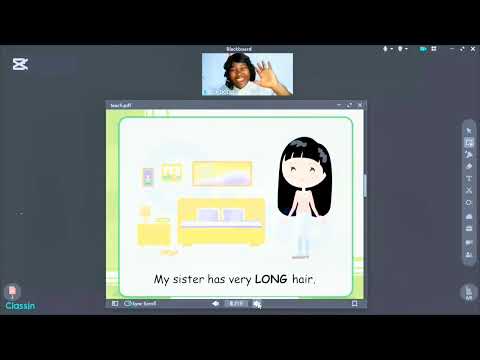


 Questions for You